I Am Monkey
- 4.7
- Rating
- 10.00M
- Installs
- Free
- Price

 Analysis by App-foxy
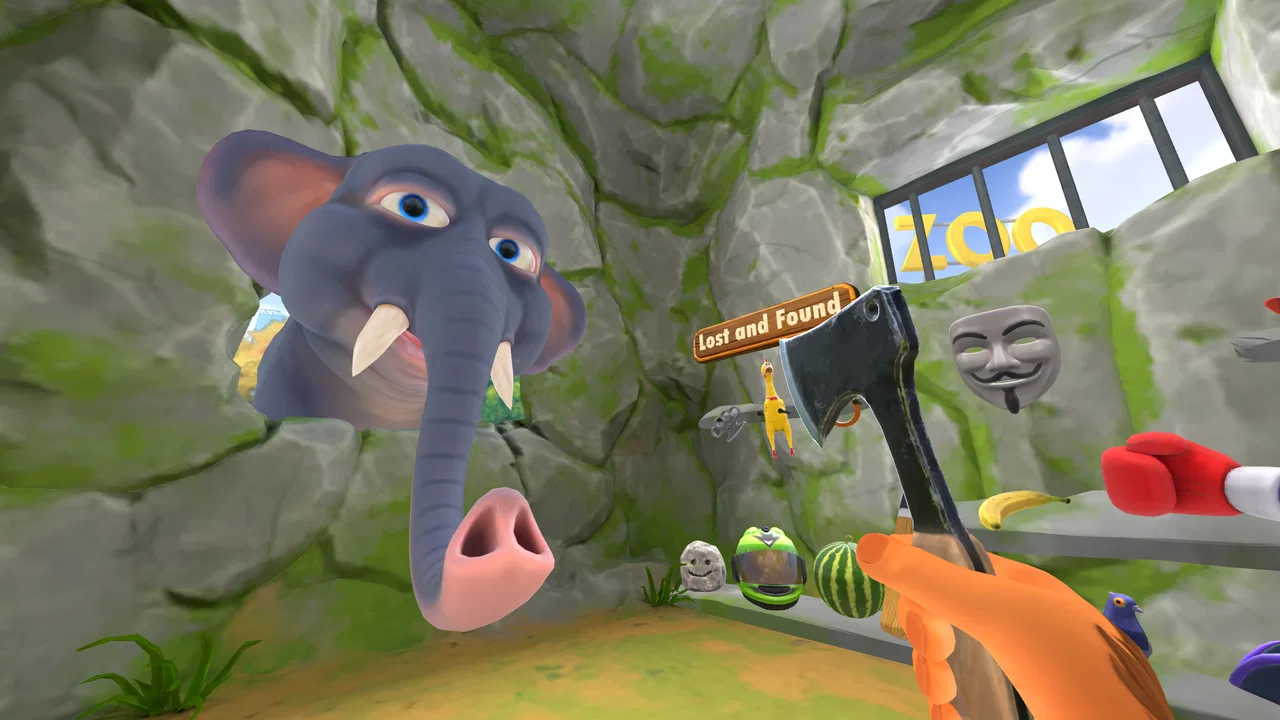
I Am Monkey is a simulation game with a wonderfully strange starting point: I play as a monkey living behind bars, but the experience is less about simply waiting in a cage and more about deciding how to react to that situation. After spending time with it, my main impression is that its appeal comes from the contrast between a confined setting and the freedom to make choices within it. It is not the kind of game I would recommend to someone looking for a deep management simulator or a conventional action adventure. Instead, it works best as a playful, unusual experience for short sessions, experimentation, and players who enjoy seeing how a simple premise can create unexpected moments.
That unusual setup also gives the game a personality that many simulation titles lack. Rather than asking me to build a city, run a farm, or manage a business, it puts the focus on a character and a small world. I found myself paying attention to what I could do next, how the environment responded, and whether a choice produced a funny or surprising result. The strongest reason to try it is its unusual mix of confinement, curiosity, and player choice.
Why the cage setting works better than expected
The central idea is easy to understand immediately. I am behind bars, and the world around me becomes the space where I test possibilities. That clarity matters because the game does not need a long explanation before it becomes interesting. I can begin by observing, trying an action, and then deciding whether to repeat it or take a different approach. The setting gives every small decision a little more weight than it might have in a larger, busier game.
You May Also Like

 Blood Strike: 2.5 Anniversary
Blood Strike’s Loadouts Turn Every Drop Into a Tactical Gamble
A close look at Blood Strike’s custom loadouts: how fast access to signature weapons reshapes its battle royale rhythm, rewards preparation, and narrows the gap between fights.

 Pandora - Music & Podcasts
Pandora’s Music Is Easy to Start, but Harder to Recover
Pandora’s strength is its low-effort path from a seed to a station. Its weak spot is how much confidence it asks you to place in connection, setup, and quiet recovery.

 8 Ball Pool
 Is Built on Rivalries, Rematches, and Routine
A close look at the rivalries, rematches, shared routines, and unanswered safety questions that turn a quick pool match into a persistent mobile community.

 Samsung Music
’s Quiet Strength Is Playing What You Already Own
Its reach comes less from spectacle than from dependable access to a personal library. That simplicity is both the app’s strongest retention engine and its ceiling.

 AccuWeather: Weather Radar
AccuWeather Review: A Quick, Clear Forecast for Everyday Decisions
For everyday plans, the best forecast is the one you can understand quickly. AccuWeather makes rain timing, radar, and local conditions easy to act on, with a few trade-offs.

 Hill Climb Racing
Why Hill Climb Racing Still Turns Crashes Into One More Run
A tiny car, a bumpy hill and one more upgrade: Hill Climb Racing keeps resurfacing because its simple chaos makes every near-miss feel personal.
More From Our News Desk



In a typical simulation game, the pleasure often comes from watching a system grow over time. A farm produces more resources, a city expands, or a business becomes more efficient. Here, the satisfaction feels more personal and immediate. I am not primarily optimizing a spreadsheet of resources. I am exploring a situation. That makes the game easier to pick up when I have only a few minutes, while still leaving room for experimentation when I want to stay longer.
I also like that the premise does not try to disguise itself as something ordinary. The game is built around the identity of the monkey, the bars, and the choices available inside that unusual world. This gives it a stronger hook than many generic simulation releases. Even before considering its progression, the concept is memorable enough to make me curious about what the next interaction might reveal.
Small decisions are the main attraction
My most useful approach was to resist rushing through the first actions. Instead of treating every interaction as something to complete as quickly as possible, I looked for patterns. If one choice led to a different reaction, I tried to remember what had caused it. This made the experience feel less like tapping through a checklist and more like learning the boundaries of a playful experiment.
That is also where the game can surprise new players. The cage is visually restrictive, but it does not automatically make the experience feel limited. The important question is not how large the map is; it is how many meaningful possibilities the setting can support. I found that the compact premise encouraged me to look more closely. In a larger simulation, I might overlook a small detail because there is too much happening. Here, a small change can become the reason to try another session.
A practical tip is to change one decision at a time when testing the game. If I alter several things at once, it becomes harder to understand what caused a different result. Taking a slower, more deliberate approach makes the choice-driven side easier to appreciate, especially for players who initially expect a simple novelty game.
A good fit for short, repeatable sessions
I Am Monkey suits the kind of play session that happens between other parts of the day. I can imagine opening it while waiting for an appointment, taking a few minutes to explore, and closing it without feeling that I abandoned a complicated campaign. It also works after a longer break because the premise is easy to remember. I do not need to reconstruct a large strategy before making progress again.
That convenience is one of its clearest advantages over more traditional simulation games. A farming or city-building title usually rewards planning over a longer period, and a management game can become frustrating if I forget the state of several systems. This game is more approachable when I want interaction without a heavy commitment. The trade-off is that players who need a large economy, detailed construction tools, or long-term optimization may find the experience too focused.
For me, the best everyday use case is a short reset after work or study. I can play with a curious mindset rather than trying to win as efficiently as possible. The game gives me a small space to experiment, and that makes it a better companion for relaxed play than for intense competition.
The details that shape the experience
Estoty has positioned the game as a free simulation title, which makes trying it straightforward. The current version is 1.1.0, and the game has already attracted over five million installs. Its average rating is 4.8 from around fifty-six thousand ratings, with roughly one thousand two hundred written reviews. Those figures suggest that the unusual premise is connecting with a broad audience, although popularity alone does not guarantee that every player will enjoy its particular style.
The free entry point is helpful because this is a game I would want to sample before deciding whether its humor and interaction style suit me. There are in-app purchases priced from $1.99 to $4.99 per item. I would approach those purchases carefully and first decide whether the basic loop holds my attention. For a game built around curiosity, paying too early could reduce the satisfaction of discovering what the experience offers naturally.
The age rating is Teen, so I would not treat it as a universal children’s game simply because the premise sounds playful. Parents should check whether the tone and interactions match what they expect for a younger player. For older players, the rating is a useful reminder that the game’s humor or situations may be aimed beyond very young children.
How I would play it more effectively
My first recommendation is to treat each session as a small investigation. Start with the obvious interaction, then repeat it with a different intention rather than tapping randomly. This helps reveal whether the game rewards persistence, timing, or simply trying different choices. Even when an action appears minor, remembering the context around it can make later experimentation more satisfying.
Second, I would avoid judging the game after only a few seconds. Its appeal is not necessarily in a dramatic opening sequence. The experience depends on the player being willing to explore the premise. If I only look for immediate spectacle, I may miss the quieter pleasure of testing the limits of the setting.
Third, I would use the game as a deliberately low-pressure alternative to more demanding simulations. It is easy to bring expectations from farming, construction, or business games and then feel disappointed that this is not the same kind of experience. Once I stopped expecting a conventional progression system, I could appreciate the smaller scale and the focus on choice more clearly.
There is also a useful trade-off in the game’s simplicity. A compact world makes experimentation approachable, but it can also make repetition more noticeable for players who need constant novelty. I enjoyed returning when I had a specific idea to test. I was less interested when I opened it without any curiosity about what to try next. That distinction is important: the game rewards an exploratory mood more than passive consumption.
Where it may fall short
The same focused premise that gives I Am Monkey its identity can become its main limitation. Players who expect a broad simulation with many interconnected systems may find the cage setting too narrow. There is a difference between having choices and having a deep management structure. This game’s appeal comes from the former, so I would not choose it as a replacement for a detailed city builder, life simulator, or resource-management game.
I also think the experience depends heavily on personal tolerance for repetition. If I enjoy trying the same situation from a new angle, the setting remains inviting. If I need a constant stream of new locations, objectives, or large unlocks, the compact format may feel thin. That is not necessarily a design failure, but it does make the audience more specific than the free download and high rating might suggest.
The purchase structure is another point to consider. The game costs nothing to start, but optional items range from $1.99 to $4.99 each. I would not spend simply because I felt encouraged to do so during a moment of curiosity. A better workflow is to play enough to understand the basic appeal, decide whether I expect to return regularly, and only then consider an optional purchase. That keeps the decision based on lasting enjoyment rather than first impressions.
Because the game is rated Teen, it is also not the choice I would make when searching for a clearly child-oriented simulation. The monkey theme may look broadly accessible, but the intended audience should be judged by the rating and the overall tone rather than by the character alone.
Who should download it
I would recommend I Am Monkey to players who enjoy unusual premises, compact environments, and games that invite experimentation instead of demanding a fixed strategy. It is especially suitable for someone who wants a free title that can be understood quickly and revisited in short sessions. It may also appeal to players who like discovering how a game reacts to unexpected choices.
I would be more cautious about recommending it to someone whose favorite simulations are built around long-term planning. If the main pleasure comes from expanding an empire, balancing a complex economy, decorating a large space, or managing many characters, this game may feel too concentrated. A conventional simulation would be the better choice in that situation because it offers a broader structure for planning and optimization.
It is also not ideal for a player who dislikes ambiguity. The game is more enjoyable when I am willing to test something without knowing exactly what will happen. If I want every objective explained clearly and every reward presented immediately, the exploratory approach may feel less satisfying.
On the other hand, the game can be a good introduction to simulation-style play for someone who finds traditional management titles intimidating. The setting is easy to grasp, and the focus on a single character makes the first steps less overwhelming than learning a large collection of menus and systems. I would still keep the Teen rating in mind when choosing it for another person.
My final recommendation
After playing it, I see I Am Monkey as a focused simulation built around a memorable situation rather than a conventional management framework. Its best quality is the way it turns a restricted setting into a reason to experiment. I enjoyed the feeling of testing possibilities, noticing small differences, and returning with a new idea instead of following one obvious route.
Its limitations are equally clear. The experience will not satisfy everyone who wants a large world, deep resource systems, or constant expansion. Repetition can become more apparent if I play without a specific curiosity, and the optional purchases mean I would take a measured approach after downloading it for free.
Still, I think the game earns a recommendation for the right player. With over five million installs and an average rating of 4.8, it has clearly found an audience, and my experience explains why: the concept is distinctive, the barrier to entry is low, and the small scale makes it convenient to revisit. If you want a quirky, choice-focused simulation rather than a traditional management game, this is worth trying before spending anything.
My verdict is positive but specific. I would suggest it to a friend who enjoys playful experiments and short sessions, while steering a strategy enthusiast toward a deeper simulation instead. The game succeeds because it knows what it wants to be: a strange, compact world where the fun comes from wondering what might happen when I make one more choice.
FAQs for I Am Monkey
01What is the main objective of the I Am Monkey app?
I Am Monkey is an engaging simulation game where players take on the role of a monkey exploring vivid environments. The main objective is to complete various tasks and challenges, such as collecting bananas and unlocking new levels, all while enjoying the game's realistic graphics and intuitive controls. Players can also customize their monkey with various outfits and accessories.
02Is I Am Monkey suitable for children?
Yes, I Am Monkey is designed to be family-friendly and suitable for children. The game features a colorful, cartoonish design that appeals to younger audiences. It also includes educational elements, teaching kids about different monkey species and their habitats. Parental controls can be adjusted to ensure a safe gaming experience for all ages.
03What are the system requirements for I Am Monkey?
I Am Monkey requires iOS 11.0 or later for Apple devices and Android 6.0 or higher. The app is optimized for both smartphones and tablets, offering smooth performance across devices. A stable internet connection is recommended for downloading updates and accessing online features. Ensure sufficient storage space is available before installation.
04Are there in-app purchases in I Am Monkey?
Yes, I Am Monkey offers in-app purchases that enhance the gameplay experience. Players can buy additional outfits, new levels, and power-ups. While these purchases can improve gameplay, they are entirely optional. The game provides ample opportunities to earn rewards through regular play, ensuring a fulfilling experience without spending money.
05Does I Am Monkey require an internet connection?
I Am Monkey can be played offline, allowing users to enjoy the game without an active internet connection. However, certain features, such as leaderboards, social sharing, and updates, require internet access. To fully experience all aspects of the game, an occasional connection is beneficial for syncing progress and accessing new content.
Pros
- Engaging and fun gameplay mechanics.
- Colorful and vibrant graphics.
- Easy to learn controls.
- Regular updates with new features.
- Suitable for all age groups.
Cons
- In-app purchases can be pricey.
- Occasional lag on older devices.
- Limited offline functionality.
- Ads can be intrusive at times.
- Requires constant internet connection.

I Am Monkey
Gallery